
Language Development
Words grow through warm, everyday connection.
BloomKids helps families make language learning feel natural through stories, conversation prompts, picture cards, matching activities and playful tools designed for shared attention.
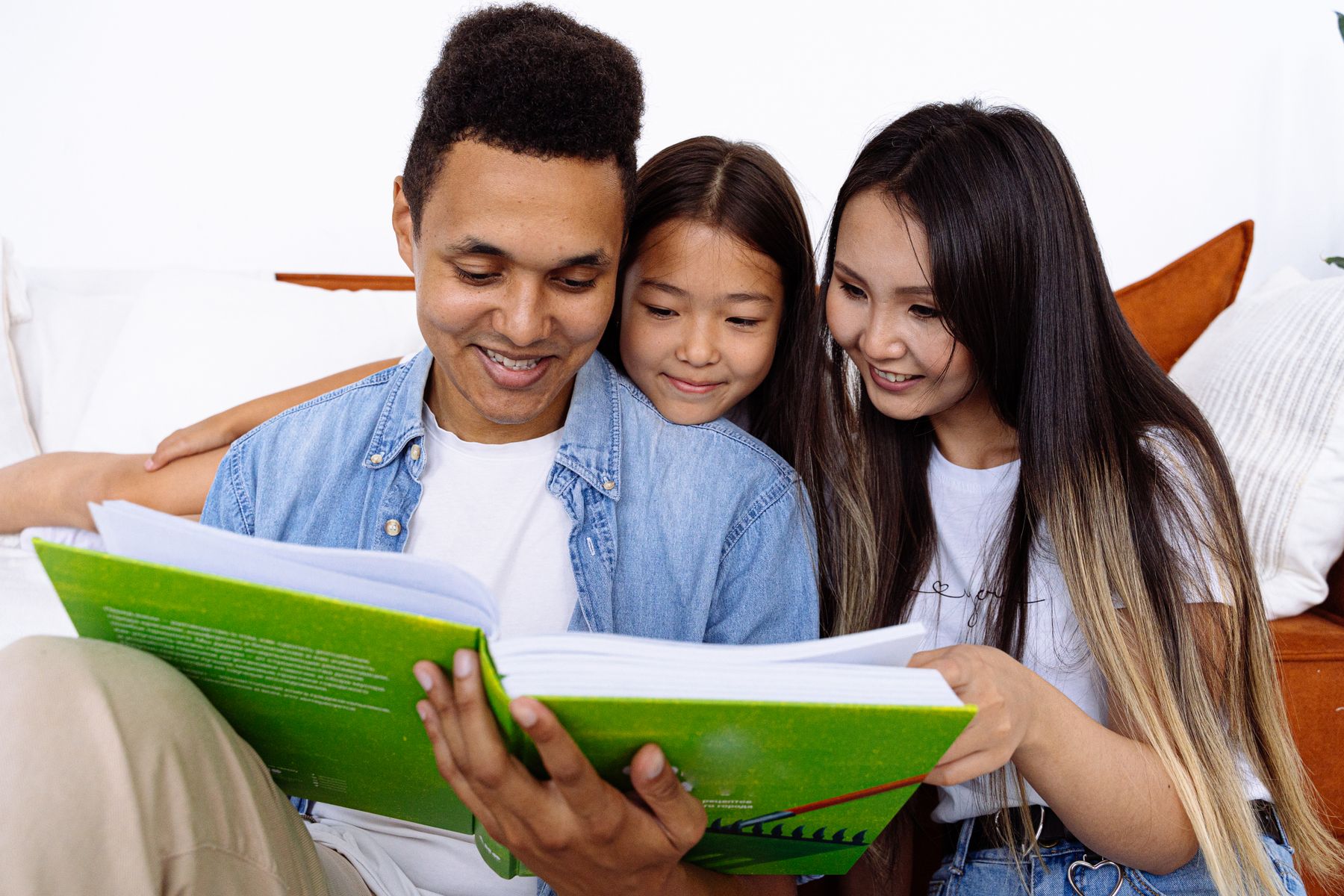
Four ways language takes shape.
Children build communication through repeated, meaningful experiences. The goal is not a perfect answer; it is a calm invitation to notice, listen, respond and try again.
Shared conversation
Pause during play, describe what is happening and use open prompts that make room for gestures, sounds, single words or longer ideas.
Books and picture talk
Let images lead. Point, label, predict and connect the page to familiar people, places, routines and feelings.
Hands-on word play
Matching cards, object sorting and sound games connect spoken language with touch, movement, visual clues and real-world categories.
Feelings and self-expression
Naming emotions, choices and needs gives children practical language for everyday moments, repair and connection.
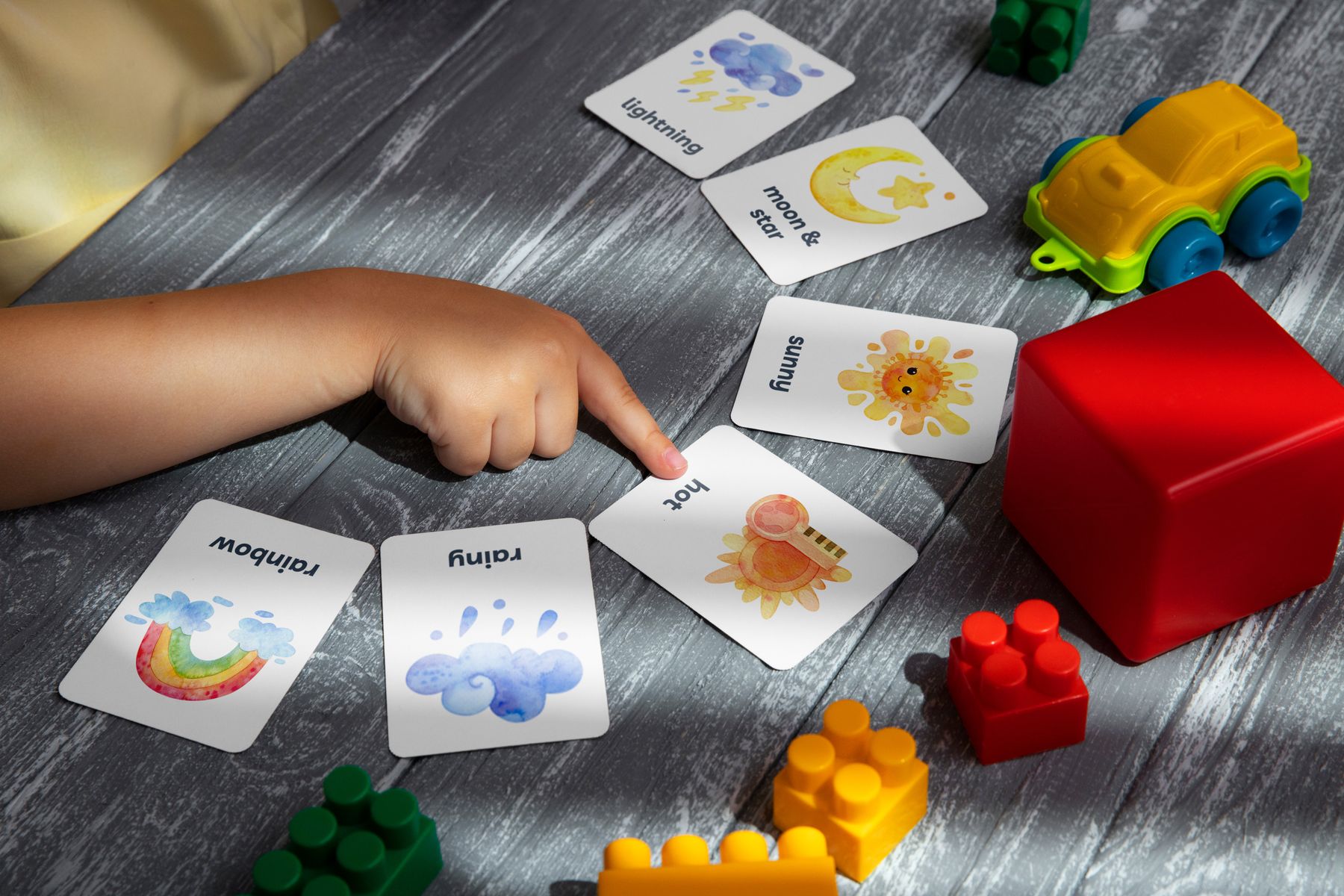
Turn one image into a whole conversation.
A picture card can become a naming game, a memory prompt, a sound hunt or a simple story. Follow the child’s interest and expand gently rather than testing for a single correct response.
- Name what is easy to see: “A yellow sun.”
- Add one useful detail: “The sun feels warm.”
- Invite a choice: “Is this morning or evening?”
- Connect it to life: “When did we see a rainbow?”
Small moments can hold rich language.
Choose one idea that fits your day. Repetition helps children feel secure enough to participate in their own way.
Morning choices
Offer two clear options and model the words: “Blue cup or yellow cup?” Pause so the child can point, sign, sound or speak.
Builds practical vocabulary
Sound basket
Gather familiar objects with the same beginning sound. Say each word slowly and let the child handle, sort and compare.
Supports sound awareness
Story sequence
Use three cards or photos to talk about what happened first, next and last. Accept creative answers and add structure gently.
Strengthens narrative order
Bedtime reflection
Invite one memory from the day: something funny, kind, tricky or new. Adults can model first when a child needs a starting point.
Connects language and emotion
Two invitations for active language.
Use age-appropriate materials and stay nearby. Keep activities relaxed, adaptable and responsive to the child’s pace and communication style.
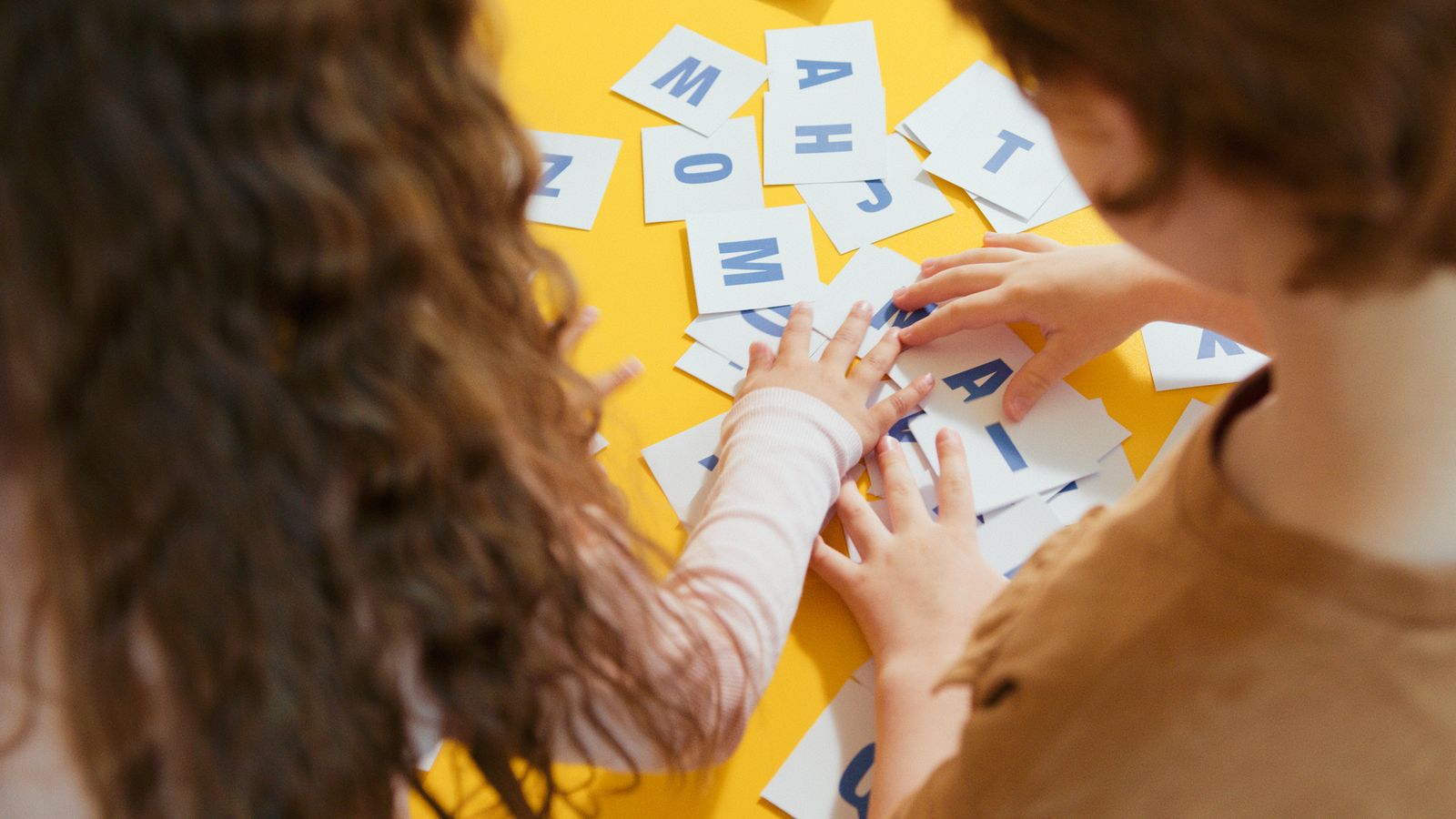
Letter and object match
Place a few letter cards beside familiar objects. Say the object names together, listen for the beginning sound and match without rushing.
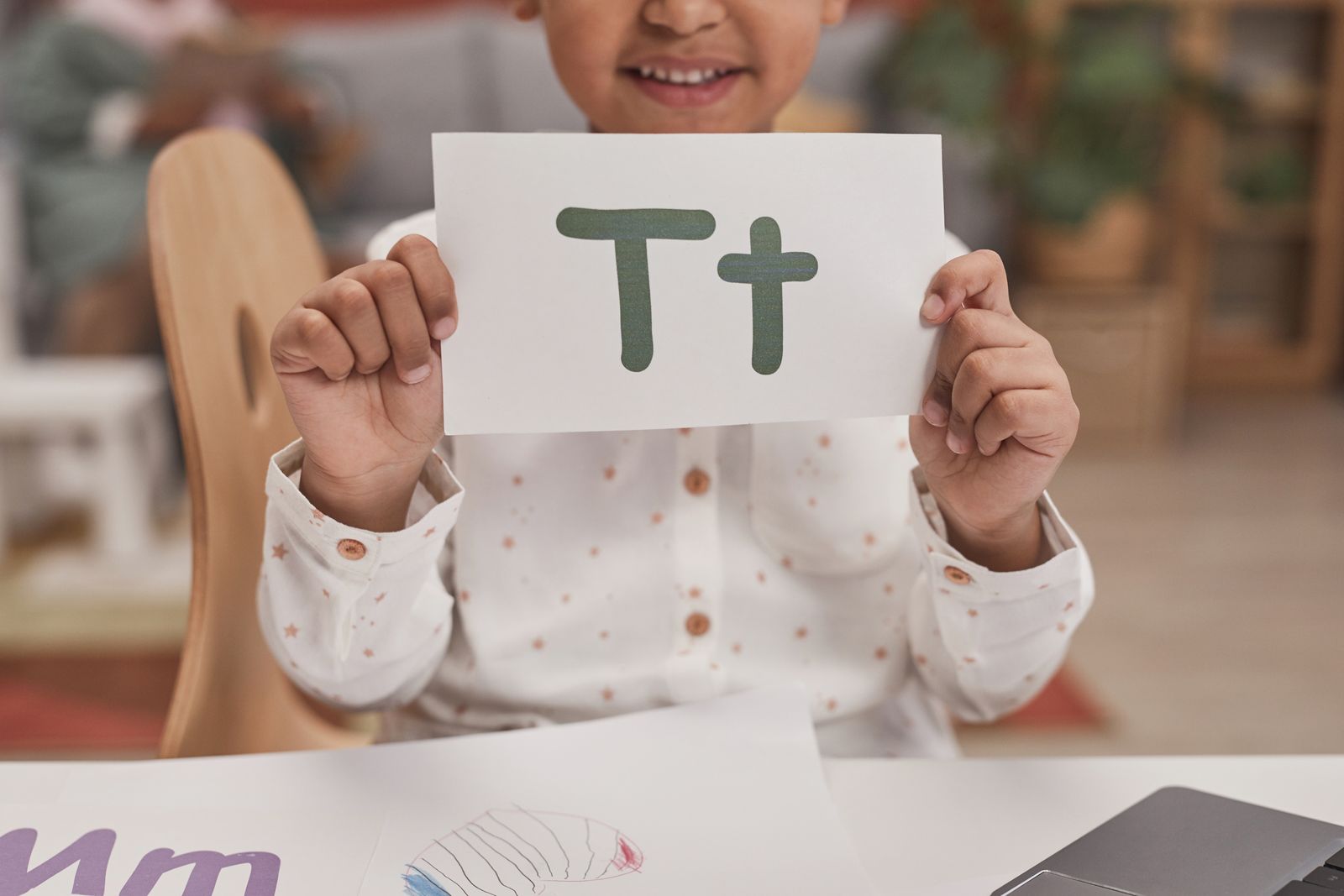
Show, say and extend
Invite the child to choose a card. Name it, add a related action or describing word, then take turns finding another word that connects.
Meet the child where communication is today.
Age labels are only a starting point. Select materials by the child’s interests, current abilities, attention span and the level of adult support available.
Words through real objects
Use sturdy picture cards, simple books, songs, gestures and familiar objects with clear adult modeling.
- One-step play invitations
- Simple naming and sound play
- Large, easy-to-handle pieces
Language through categories
Add matching games, sequencing cards and prompts that invite describing, comparing and recalling.
- Two- and three-step stories
- Opposites, groups and attributes
- Questions with more than one answer
Language through ideas
Explore word building, creative storytelling, journals and activities that connect language with planning and reflection.
- Longer narratives and explanations
- Emotion and perspective vocabulary
- Child-led projects and presentations
Make space for every kind of response.
Communication may appear as eye gaze, movement, signs, sounds, single words or detailed stories. Notice the message, respond warmly and model one small step beyond what the child already shares.
The child notices and names what matters.
The adult keeps the idea and adds one useful word.
A simple exchange becomes a richer shared sentence.
Simple answers for everyday practice.
Language growth is individual. These ideas are general family learning guidance and can be adapted to a child’s age, interests and abilities.
How long should a language activity last?
Should I correct every word or sound?
What if my child does not answer a question?
How do I choose age-appropriate materials?
How should learning cards and books be stored?
Build a language-rich home, one shared moment at a time.
Explore early learning tools for conversation, stories, letters, sounds, matching and emotional expression. Need help choosing a product? Our team is ready to guide you.