
STEM Activity Ideas
Small experiments. Big moments of discovery.
Turn familiar materials into calm, hands-on invitations to build, test, compare and wonder. These flexible ideas help families explore early science, technology, engineering and math through meaningful play.
Choose materials and activity complexity for your child’s age, current abilities and interests. Adult setup and supervision are recommended.

Start with a question
Invite a prediction before offering an answer.
Keep materials simple
Use clear, age-appropriate pieces that are easy to compare.
Welcome another try
Treat revisions as part of the activity, not as mistakes.
Follow their curiosity
Let the child’s observations shape what happens next.
A bright little STEM lab for home
Each idea can be simplified or extended. Focus on noticing, describing and comparing rather than reaching one perfect result.
Build a bridge
Create a span for a small toy using blocks, craft sticks or sturdy cards. Test how the bridge changes when the base becomes wider or the surface gains support.
Building pieces, two stable supports, a lightweight toy and a ruler for simple measuring.
Guide a magnetic maze
Draw a simple path on card and move a magnetic piece from below the surface. Change the corners, distance or material thickness and notice what happens.
A child-safe magnet set, a metal token, thick paper and washable markers.
Sort sink or float
Choose a small group of washable objects, make predictions, then place them in a shallow water container one at a time. Compare material, shape and weight.
A shallow basin, towel, waterproof sorting cards and large age-appropriate objects.
Design a pattern tower
Choose two or three colors or shapes and repeat them while building upward. Pause partway and invite the child to predict the next piece.
Stacking blocks, counters, large beads or other easy-to-grasp pattern materials.
Explore shadow shapes
Place solid and cutout shapes between a safe light source and a wall. Move them closer and farther away to compare size, edge and clarity.
A child-safe flashlight, shape pieces, a light wall and an adult-controlled setup.
Make a ramp and roll
Prop a firm board at a gentle angle and compare how different balls or wheeled pieces travel. Adjust one feature at a time and observe the result.
A stable ramp surface, large rolling pieces, books for support and a clear floor area.

Make space for thinking out loud
Children often reveal their best ideas through gestures, repeated attempts and short observations. A simple rhythm helps the activity stay playful while giving those ideas room to grow.
-
1
Invite
Present a small set of materials and one clear challenge.
-
2
Predict
Ask what might happen and why before testing.
-
3
Notice
Describe changes in shape, speed, balance, pattern or position.
-
4
Extend
Change one variable and invite another thoughtful try.
Connect building and problem-solving with everyday family play
A useful STEM invitation does not need a complicated setup. It needs a clear material, a meaningful question and enough time to explore.
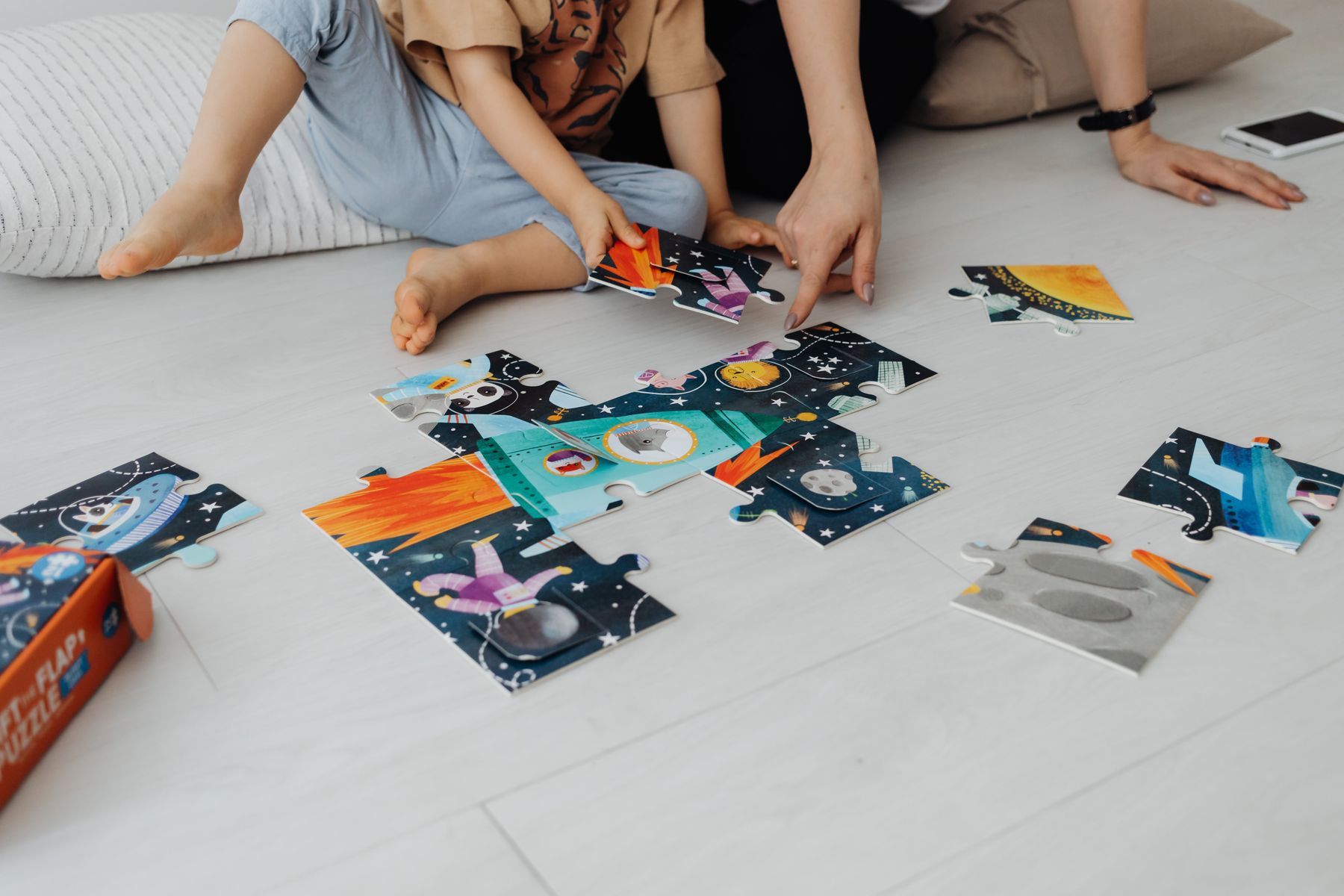
Turn puzzles into engineering talk
Before placing a piece, compare edge, shape, color and orientation. Invite the child to explain what they notice and test a new strategy when a piece does not fit.
- Sort pieces by one visible feature.
- Rotate and compare before choosing.
- Describe a strategy rather than rushing the answer.

Let children document what changed
A quick drawing, simple tally or before-and-after photo can help children revisit an idea. Keep the record light and let the child choose what feels important.
- Draw the first design and the revised design.
- Count trials with marks or counters.
- Save one sentence about the discovery.
Adapt the invitation to the child in front of you
Age ranges are only a starting point. Select materials, piece size and activity length for the child’s current skills, comfort and supervision needs.
Focus on action and contrast
Use a small number of large pieces and simple language around cause and effect.
- Stack, roll, drop, match and sort.
- Compare big and small, fast and slow, in and out.
- Keep turns short and repeat favorite actions.
Add choices and predictions
Offer two or three materials and invite the child to choose a plan before testing.
- Build toward one clear challenge.
- Change one feature between trials.
- Use drawings, patterns and simple measuring.
Encourage planning and revision
Invite children to define the challenge, track a result and explain their design choices.
- Compare multiple solutions.
- Record measurements or trial counts.
- Reflect on what they would change next.
Keep the setup clear, calm and ready for another day
Review product instructions before use, choose pieces appropriate for the child’s age and abilities, and supervise activities involving magnets, water, light sources or small components. Clean and store materials according to their care directions.
Use a stable, well-lit area with enough room for all materials.
Match size, complexity and material to the child’s stage and abilities.
Sort, count and store pieces as a gentle final part of the activity.
Thoughtful help for your next learning moment
Need help choosing an age-appropriate learning product or planning a family activity? Reach out to BloomKids for friendly product support.